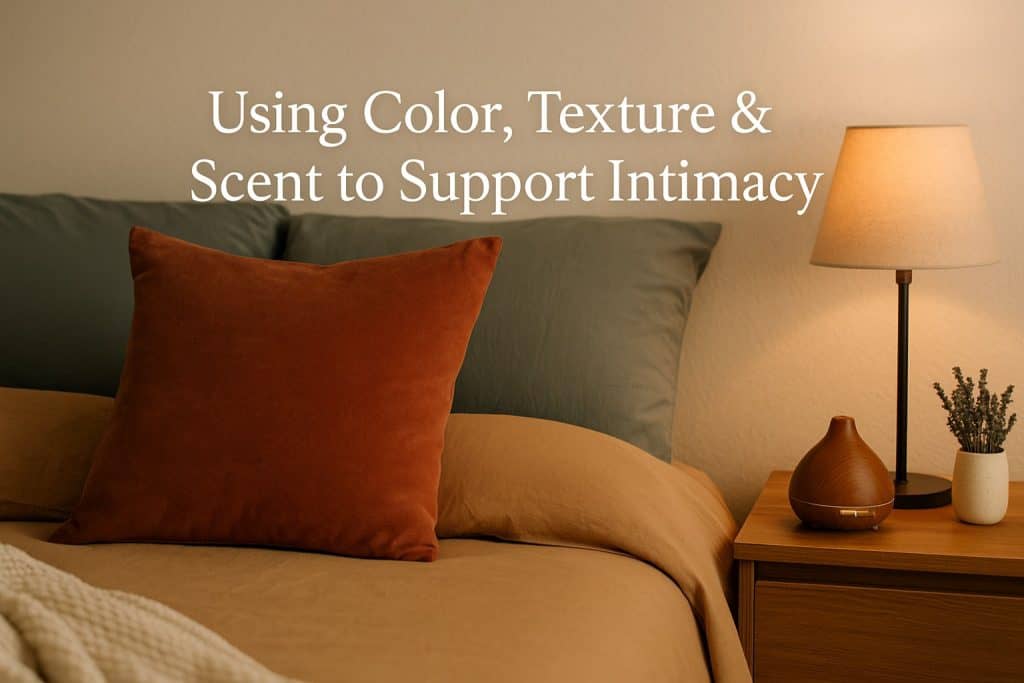
A supportive, intimacy friendly bedroom does not happen by accident. It is created intentionally through subtle sensory choices that speak directly to the emotional brain. Color, texture, and scent are more than decor decisions. They act as psychological tools that signal comfort, safety, and connection. These elements help shape the emotional atmosphere that partners experience the moment they step into the room.
This non explicit guide explains how these sensory elements influence mood and how you can use them to create a bedroom environment that supports closeness, calmness, and emotional bonding. When chosen with care, these details work together to reduce tension, quiet overstimulation, and create a space where both partners can unwind and reconnect.
Why Sensory Elements Matter for Intimacy
Human connection is closely tied to the sensory environment. When the space around you feels soothing, gentle, and emotionally safe, the nervous system relaxes. That sense of calm makes it easier for partners to be present with one another and settle into a more natural rhythm of connection.
The Bedroom Environment Should:
- Reduce overstimulation
- Encourage relaxation
- Lower stress responses
- Support emotional presence
- Invite comfort and softness
How Color Shapes Emotional Atmosphere
Colors influence the nervous system by triggering emotional associations. Some tones feel energizing, while others naturally calm the body. For intimacy, the goal is to shape an atmosphere that feels warm, grounded, and emotionally open.
Best Colors for an Intimacy-Supportive Bedroom:
- Soft neutrals: calming, clean, and uncluttered
- Warm beiges and creams: comforting and cozy
- Cool blues: supportive of relaxation and softness
- Muted greens: balance, harmony, and emotional grounding
- Earthy tones: stability, warmth, and a steady emotional base
Avoid bright neons or harsh whites because they tend to stimulate alertness instead of calm.
Simple Color Enhancements:
- Neutral or warm colored bedding
- A soft toned throw blanket
- Pillows in calming earth tones
- Bedside lamps with warm colored shades
- Subtle wall art in soothing palettes
How Texture Supports Connection
Texture is one of the most overlooked elements of emotional ambience. Soft, cozy materials create warmth, comfort, and a natural sense of ease. When the bedroom feels comfortable to the touch, it becomes easier for partners to settle into a calm, grounded rhythm together.
Textures That Encourage Relaxation:
- Plush blankets that add warmth and softness
- Smooth, breathable sheets that feel gentle against the skin
- Velvet or knit throw pillows for added comfort
- Soft area rugs that make the room feel grounding and warm
Layering Textures for Comfort:
- Add a soft throw at the foot of the bed
- Use two or three pillows with different textures
- Place a plush rug near the bed
- Mix smooth sheets with a warm blanket
How Scent Affects Intimacy
Scent is deeply connected to memory, emotion, and the body's natural relaxation response. A gentle, calming aroma can lower stress, slow breathing, and help both partners unwind at the end of the day. When used intentionally, scent can become a quiet signal that the bedroom is a place for calmness, presence, and emotional connection.
Most Effective Calming Scents:
- Lavender: relaxation and calm
- Vanilla: warmth and comfort
- Sandalwood: grounding and balance
- Jasmine: soothing and uplifting
- Cedarwood: emotional grounding
Ways to Add Scent Safely:
- Essential oil diffusers
- Subtle room sprays
- Linen sprays lightly misted over bedding
- LED candles with soft, comforting fragrances
- Dried lavender sachets placed in drawers or near the bed
Combining Color, Texture and Scent for Maximum Impact
Color, texture, and scent work best when they support each other. When layered intentionally, these elements shape the emotional tone of the room and help create an atmosphere that feels warm, grounded, and soothing.
How to Combine Them:
- Use warm toned bedding in cozy textures
- Pair soft lighting with gentle, calming scents
- Add a grounding rug to balance cooler wall colors
- Match scent choices to the emotional tone of your color palette
Final Encouragement
Your bedroom environment can either work against connection or actively support it. When you choose color, texture, and scent intentionally, you create a sensory atmosphere that helps both partners relax, open up, and feel emotionally grounded. These choices set the stage for deeper presence and calmer evenings. Start with one sensory change and slowly build the sanctuary you want. Even small shifts can create meaningful emotional impact. Your relationship deserves an environment that nurtures calmness and closeness, and these sensory elements are a powerful place to begin.