Man Talk may earn a commission when you buy through links on this page. That never changes what gets recommended, and it never changes the price you pay.
Best EDC Flashlights Under $50
The best EDC flashlight under $50 in 2026 is the ThruNite Archer Mini, at around $14. It pairs a 405-lumen beam with USB-C charging and an IPX8 waterproof rating. The Wuben X4 (around $50) is the top pick for features, with 1,500 lumens and a magnetic tail cap. The Streamlight MicroStream USB (around $43) is the reliability pick, backed by a limited lifetime warranty. Every light in this guide recharges from a cable and rides in a pocket without complaint. The differences show up in brightness honesty, runtime, clip quality, and water resistance. Those spec sheets trip up most first-time buyers, because budget listings often inflate lumen numbers far past reality. This guide compares eight lights on all of those points. The comparisons rest on published ANSI FL1 ratings and the documented consensus of the flashlight community, not marketing copy. It also explains what those ratings measure, so a spec sheet stops being a guessing game. By the end you will know which light fits your keys, your pocket, and your budget. You will also know which marketplace listings to avoid entirely.
The picks at a glance
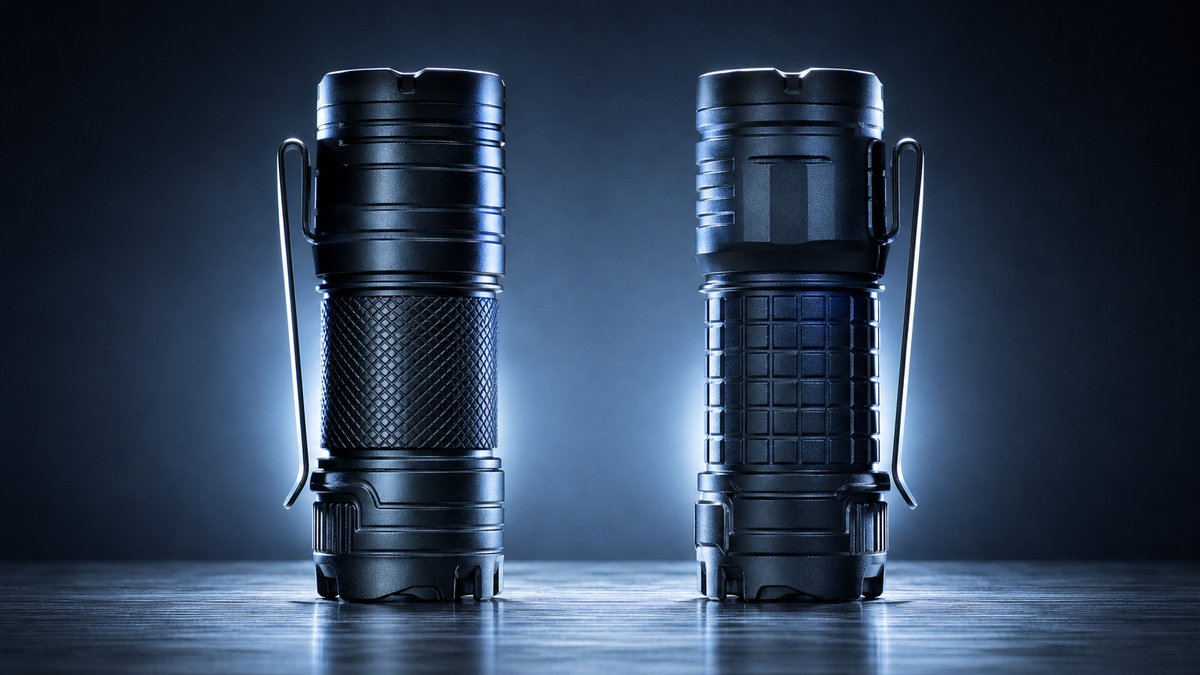
Eight EDC flashlights under $50 stand out in 2026. The list: ThruNite Archer Mini, Olight iMini 2, Nitecore TINI2, RovyVon A23 Gen 2, Streamlight MicroStream USB, Wuben X4, Olight i5R EOS, and Wurkkos FC11C. Each one wins a specific carry style rather than an overall crown.
| Light | Typical price | Rated output | Best for | Charging |
|---|---|---|---|---|
| ThruNite Archer Mini | ~$14 | 405 lumens | First pocket light | USB-C |
| Olight iMini 2 | ~$14 | 50 lumens | Keychain backup | Built-in USB plug |
| Nitecore TINI2 | ~$30 | 500 lumens | Keychain upgrade | USB-C |
| RovyVon A23 Gen 2 | ~$36 | ~380 lumens | Battery flexibility | USB-C |
| Streamlight MicroStream USB | ~$43 | 250 lumens | No-drama daily carry | Micro-USB |
| Wuben X4 | ~$50 | 1,500 lumens | Most features | USB-C |
| Olight i5R EOS | ~$27 | 350 lumens | AA-format upgrade | USB-C (on the cell) |
| Wurkkos FC11C | ~$25 | 1,200 lumens | Enthusiast value | USB-C |
Prices move around week to week on these lights, especially during brand sales. Treat the numbers above as typical street prices, not guarantees. The two entry picks sit under $15, which makes either an easy first step into real carry gear.
How these picks were chosen
Every pick had to meet four tests. The tests: believable ANSI FL1 ratings, cable recharging, a clip or keychain attachment worth trusting, and a brand track record in community reviews. Man Talk built this list from published specifications and documented owner consensus, not from paid placements.
That last point matters in this niche. Marketplace listings are crowded with no-name lights making absurd five-digit lumen claims from a single small cell. The ANSI FL1 standard exists partly because of claims like that. First published in 2009, it defines exactly how brightness, runtime, beam distance, and water resistance get measured. Brands that print FL1 numbers invite direct comparison, which is why serious makers publish them. Where community testing disagrees with marketing, this guide sides with the community. Man Talk staff spent years living in Alaska and the mountains, where carry gear gets used, not displayed. No first-person testing claims are made here; when a claim needs a source, it comes from owner reports and manufacturer listings.
ThruNite Archer Mini: the $14 benchmark
The ThruNite Archer Mini is the default first flashlight recommendation at around $14. It packs a 405-lumen output, USB-C charging, and an IPX8 waterproof rating into a penlight-sized aluminum body.
The pocket clip holds it in a jeans pocket or on a cap brim, and the rated beam reaches 87 meters. Modes stay simple: low, turbo, and strobe. The manufacturer listing claims up to 7.5 hours of runtime on the lowest setting. For a light that costs less than most lunches, that spec sheet reads like a misprint. It is not, and that is why community threads treat it as the standard budget answer.
The catch is thermal reality. A body this small cannot hold 405 lumens for long, so treat turbo as a short burst. Sustained output settles far lower, which is true of every light this size. As a first light, a gift, or a glovebox spare, nothing else here matches the value.
Olight iMini 2: the keychain backup (~$14)
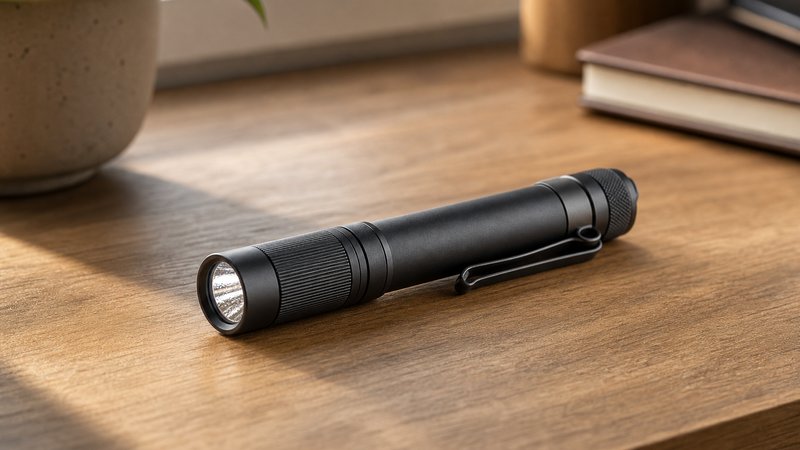
The Olight iMini 2 is the light for people who lose lights. It rides on a keychain, outputs 50 lumens, and turns on the moment it pulls free of its magnetic cap.
That magnetic quick-release is the whole trick. Pull the light off its cap and it is already on; snap it back and it is off. No clicking through modes in the dark. Charging happens through an integrated USB plug feeding a tiny 10180 lithium-ion cell. The rated beam reaches 21 meters, with about an hour of runtime per charge.
Fifty lumens is not a bragging number, and that is fine. Close-range tasks like keyholes, dropped items, and dark hallways need spread, not throw. Lower output also means the beam will not blind anyone at arm's length. Buy it as the always-there backup, not as the main light.
Nitecore TINI2: the keychain upgrade (~$30)
The Nitecore TINI2 is what a keychain light looks like with twice the budget. It reaches 500 lumens, charges over USB-C, and adds a small OLED display showing output and battery state.
The dual-button layout separates power from mode switching, which prevents accidental strobe surprises. A lockout function keeps it from turning on inside a pocket, a real problem for single-button keychain lights. That display sounds like a gimmick until the battery readout saves a dead-light morning. Community reviews consistently rate the TINI series among the most refined keychain options made.
The trade-offs are runtime and price. Its 500-lumen turbo is a seconds-long burst from a small internal cell, not a sustained level. At roughly twice the iMini 2 price, it earns the spend through the display, interface, and build. A titanium version also exists and still lands under $50 at typical street pricing.
RovyVon A23 Gen 2: the dual-fuel pick (mid-$30s)
The RovyVon A23 Gen 2 is the pick for battery flexibility. It runs a rechargeable lithium-ion cell for full output, and it accepts a common AAA in a pinch.
That dual-fuel design solves the dead-light problem. A drained cell mid-trip means borrowing a AAA from a remote control, not carrying a dead tube. On its lithium-ion cell the listed output sits around 380 lumens; AAA power drops that considerably. Charging is USB-C, and the side switch falls naturally under a thumb.
Build quality punches above the price, a repeated note in owner threads. The caveat is spec drift: RovyVon revises models often, so listed outputs vary between generations and retailers. Check the exact generation before ordering, and expect a street price in the mid-$30s.
Streamlight MicroStream USB: the reliable one (~$43)
The Streamlight MicroStream USB is the safe pick, because it nails the qualities that matter daily. Its FL1 ratings: 250 lumens, 1,150 candela, a 68-meter beam, and 1.5 hours on high.
Low mode runs 50 lumens for 3.5 hours, which covers most real tasks. The whole light weighs 1.2 ounces and carries a limited lifetime warranty. Streamlight builds duty lights for police and fire crews, and that reputation shows in the switch and clip. Nothing about it surprises, which is exactly the point.
The honest weaknesses number two. It charges over micro-USB rather than USB-C, an aging port to still ship in 2026. And 250 lumens will not light up a field; for distance, the Wuben X4 exists. As a single do-everything pocket light, it is the one community threads recommend without caveats.
Wuben X4: the most features under $50
The Wuben X4 crams the most capability under the $50 line. The list: 1,500 lumens, a 205-meter rated beam, a warm side light, a magnetic tail cap, and IP68 sealing.
The flat body rides in a pocket better than a round tube, and USB-C handles charging. Stepless dimming plus a battery indicator round out a spec sheet that reads like a $90 light. The side light earns its place for close work, where a focused beam just bounces off the wall. Registered buyers get a five-year warranty, against one year as standard.
The trade-off is complexity. More modes mean more to learn, and some owners prefer a light that simply turns on. The 1,500-lumen turbo also steps down quickly, as physics demands at this size. For a work light, camp light, and pocket light in one body, nothing under $50 offers more.
Olight i5R EOS: the AA-shaped workhorse (~$27)
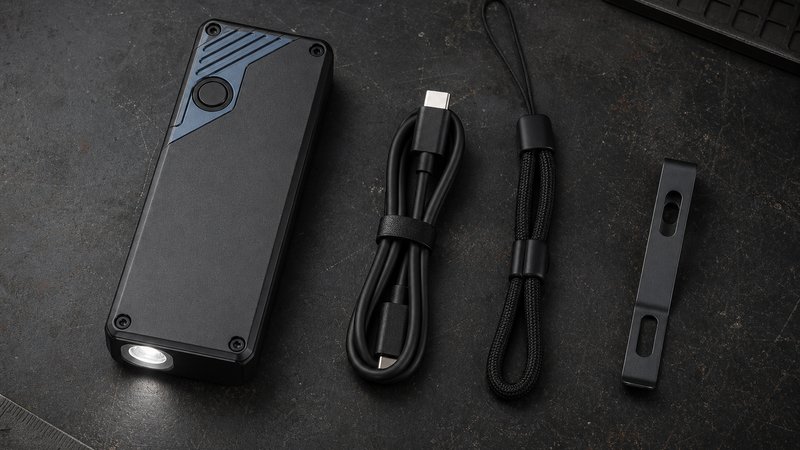
The Olight i5R EOS packs rechargeable power into a familiar AA-sized tube for around $27. It carries a rated 350-lumen high, a 15-lumen low, and a custom 14500 cell with its own USB-C port.
That battery design is the clever part. The cell charges through a USB-C port built into its positive end, so the light needs no dock and no cable adapter. A plain AA also fits in an emergency, at reduced output. The tail switch clicks between just two modes, which sounds limiting until the simplicity wins someone over. No strobe surprises, no hidden menus, and nothing to explain when it gets loaned out.
Owner reports praise the knurled grip and the two-way clip, which also fits a cap brim. The trade-off is throw, since the listed beam sits near 64 meters, short of the MicroStream. Runtime on low stretches past a full day of accumulated use. As a bridge between AA familiarity and lithium-ion performance, it has few rivals at the price.
Wurkkos FC11C: the enthusiast value pick (~$25)
The Wurkkos FC11C is the light flashlight forums recommend most at this price. Around $25 buys a 1,200-lumen maximum, a replaceable 18650 cell, USB-C charging, a magnetic tail, and IP68 sealing.
The headline feature is light quality, not just quantity. Its Nichia 519A emitter renders color at 90-plus CRI, so wood, wiring, and skin look natural instead of washed-out gray. Most budget lights score far lower on that measure. The replaceable 18650 is the other advantage, because a spare cell costs a few dollars and doubles field runtime. The listed throw reaches 155 meters, the longest figure in this guide after the X4.
Wurkkos shares factory roots with Sofirn, and community threads treat the two value brands almost interchangeably. Either name in this range signals the same thing: enthusiast features at clearance-bin prices. The catches are size and polish. An 18650 tube rides larger than any penlight here, and the mode interface takes an evening to learn. For pure specification per dollar, nothing else in the guide comes close.
Alternatives considered and rejected
Three near-misses deserve a mention: the Fenix E12 V2.0, the Olight i3T 2, and the entire no-name marketplace tier. Each one failed a specific test, not a taste test.
The Fenix E12 V2.0 came closest. Its single-AA format, 160-lumen output, and listed 70-hour low mode made it a long-running budget answer. Fenix now marks it discontinued on its own store, so a recommendation would mean chasing leftover stock. Anyone who finds one cheap still gets a good light, just not a supported one.
The Olight i3T 2 is a well-liked AAA twist on the same idea, at around $20 with a rated 200-lumen high. It fails this guide's recharging test, since no charging port exists on the light at all. Carriers happy to rotate AAA cells can add it back to a personal shortlist.
The no-name tier fails everything at once. Listings claiming 90,000 lumens from one small cell describe fiction, and the FL1 standard exists partly to expose that. A known brand name misspelled by a letter is the other warning sign owner threads flag. Ten saved dollars are not worth a light that measures a tenth of its claim.
Keychain, penlight, or flat: picking a carry style
Three shapes dominate EDC flashlights under $50: keychain lights, penlights, and flat pocket lights. The right shape depends on where the light lives, not on the spec sheet.
Keychain lights, meaning the iMini 2 and TINI2 here, win by always being present. The cost is output and runtime, since a 10180 cell holds a small fraction of a AAA's energy. Penlights like the Archer Mini, A23, and MicroStream balance size against capability. They clip to a pocket, hold usable output for real tasks, and disappear until needed. The i5R EOS and FC11C stretch the same tube idea around AA-sized and 18650 cells.
Flat lights are the newest shape, pushed forward by Wuben's X series and Nitecore's EDC series. A flat body spreads the same volume thinner, so it rides against the leg without printing like a tube. The shape also leaves room for side lights and larger cells, which is how the X4 reaches 1,500 lumens.
How to read a flashlight spec sheet
Four numbers on an ANSI FL1 label tell the real story: lumens, candela, beam distance, and runtime. The standard defines exactly how each one gets measured, so any two rated lights compare directly.
| FL1 spec | What it measures | The honest detail |
|---|---|---|
| Lumens | Total light output | Measured 30 seconds after switch-on, before step-down |
| Candela | Peak beam intensity | High candela means a tight, far-reaching beam |
| Beam distance | Usable reach in meters | Where the beam equals 0.25 lux, about full moonlight |
| Runtime | Time until output hits 10 percent | Much of that window can be far dimmer than the headline |
Water resistance rides along on the same label. IPX4 means splash resistance, IPX7 means survival of brief submersion, and IPX8 means continuous submersion past 1 meter. IP67 and IP68 add a dust-tight rating in front of the water figure. For pocket gear that meets rain, sinks, and laundry cycles, IPX8 or IP68 removes the worry.
Charging habits extend battery life on built-in cells. Lithium-ion cells degrade fastest when stored full, stored empty, or left cooking in a hot car. Topping up every week or two beats running to zero. Six of the eight picks charge over USB-C, so one phone cable covers the whole kit. The iMini 2 plugs straight into a USB port, and only the MicroStream still wants micro-USB.
Do more lumens actually make a flashlight better?
Not by themselves. Lumens measure total output, while candela decides how far the beam actually reaches. A 1,500-lumen flood can lose a distance contest to a 400-lumen thrower with better focus. For everyday tasks, beam shape and a good low mode matter more than the headline number. The MicroStream proves it: 250 honest lumens keep outranking brighter rivals in community recommendations.
How honest are runtime claims on budget lights?
Honest by the letter, misleading by impression. The FL1 runtime clock stops when output falls to 10 percent of the starting value. A light rated for two hours may spend much of that window well below its claimed brightness. Community runtime graphs, a staple of flashlight forums, show the true step-down curve. When runtime matters, check those graphs rather than the box.
Reading an ANSI FL1 spec sheet honestly
FL1 numbers are accurate and still misleading, because they describe peak performance rather than sustained performance. The standard captures the lumen figure between 30 seconds and 2 minutes after switch-on, before heat forces a step-down.
Step-down is the gap between the box and the pocket. A compact light fires its turbo, heats up within a minute or two, and drops to whatever level its body can shed as heat. Community runtime graphs show small lights sustaining a few hundred lumens at best, whatever the turbo banner says. The X4's 1,500 lumens and the TINI2's 500 are real, briefly. The MicroStream's 250 holds for most of its rated runtime, which is a different kind of honesty.
Sustained output tracks metal mass more than marketing budget. More aluminum soaks up more heat, which is why an 18650 tube like the FC11C holds high levels longer than any keychain light. When two spec sheets disagree with common sense, compare their medium modes instead of their turbos. Medium is the level a light actually lives at. A 150-lumen medium with three hours of honest runtime beats a 1,000-lumen headline in daily use.
Battery formats decoded
Four power formats cover every light in this guide: disposable AA or AAA, sealed built-in cells, the AA-sized 14500, and the larger 18650. Each format trades convenience against capacity and replaceability.
| Format | Found in | Strengths | Weaknesses |
|---|---|---|---|
| AA / AAA | i5R EOS and A23 (as backups) | Sold at any gas station, safe chemistry | Low energy, and 1.5 volts caps brightness |
| Built-in li-ion | iMini 2, TINI2, MicroStream, X4 | Sealed, simple, nothing to shop for | The light retires when the cell wears out |
| 14500 | i5R EOS | AA size with 3.6-volt power, swappable | Must never go into AA-only devices |
| 18650 | Wurkkos FC11C | Highest capacity, cheap spare cells | Bigger body, needs basic li-ion care |
The voltage gap is the fact worth memorizing. A 14500 delivers a nominal 3.6 volts from the 14 by 50 millimeter can that gives the format its name. A standard AA delivers 1.5 volts or less. Gear built for AA power can be damaged by the higher voltage, so the two only mix in lights rated for both. The i5R EOS is rated for both, which is exactly why it earns its slot.
Capacity explains the size ladder. A AAA rechargeable stores under 1,000 milliamp-hours, while common 18650 cells store 2,600 to 3,500. Built-in cells split the difference and remove every shopping decision, at the cost of a sealed service life. Lithium-ion cells typically hold about 80 percent of original capacity after 300 to 500 charge cycles. For a light topped up weekly, that clock runs six to ten years. Replaceable-cell lights sidestep the clock entirely, since a fresh cell costs less than lunch.
Common first-flashlight mistakes
Six mistakes fill beginner threads: lumen chasing, ignoring low modes, strobe-heavy interfaces, clone listings, oversized bodies, and battery neglect. Every one of them is avoidable at the checkout screen.
- Chasing the biggest lumen number. Turbo lasts seconds in a pocket-sized body, then steps down hard. Daily tasks sit in the 50-to-300-lumen range, so buy for the medium mode.
- Ignoring the low mode. A dark bedroom or tent needs 1 to 15 lumens, not a wall of light. Streamlight rates the MicroStream's 50-lumen low at 3.5 hours, and that mode does most of the work.
- Buying a strobe-first interface. Cheap lights often park strobe inside the main mode cycle. That guarantees an accidental light show in every dark hallway. The TINI2 separates power from mode switching for exactly this reason.
- Trusting clone listings. Marketplace clones copy the body shape, then skimp on the driver and cell inside. Buy from the brand store or an established dealer, and check recent reviews.
- Buying too big to carry. The best light is the one actually present. Owner threads repeat the same arc: a long tube feels serious, lives in a drawer by week two, and never leaves it.
- Neglecting the battery. Lithium-ion cells degrade fastest stored empty, stored full, or left in a hot car. A top-up every week or two keeps a built-in cell healthy for years.
What to check before buying any budget flashlight
Five checks separate a good purchase from a returned one: ratings, charging port, clip, sealing, and seller.
- ANSI FL1 ratings. A brand that publishes standardized numbers invites comparison. A tiny light claiming tens of thousands of lumens is fiction, not physics.
- Charging port. USB-C is the current standard and shares a cable with most phones. Micro-USB still works, and proprietary magnetic cables mean one more thing to lose.
- Clip quality. A weak clip turns a pocket light into a lost light. Deep-carry steel clips hold; thin stamped afterthoughts bend and let go.
- IP rating. Pocket gear meets rain, sinks, and washing machines eventually. IPX8 or IP68 sealing removes that entire category of worry.
- Seller reputation. Clones and quiet hardware revisions are common on marketplaces. Buy from the brand's own store or an established seller, and read recent reviews.
Which one should you actually buy?
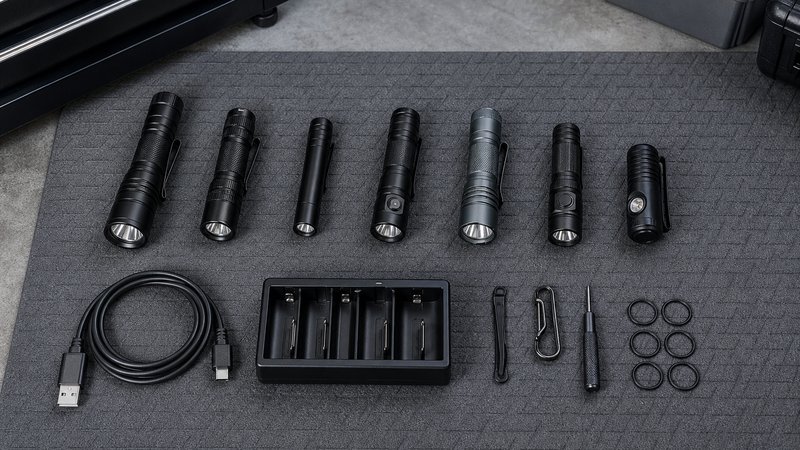
Buy the ThruNite Archer Mini as a first light or a gift. Buy the iMini 2 or TINI2 for keys, the MicroStream for no-drama daily carry, and the X4 for maximum capability. The RovyVon A23 fits anyone who wants AAA backup power. The i5R EOS suits AA loyalists, and the FC11C rewards spec hunters.
A simpler way to decide: match the light to where it will live. Keys get a keychain light, a work bag earns the X4, and a jeans pocket suits the penlights. Buying two is a legitimate answer, since the Archer Mini plus iMini 2 still costs under $30. That pairing covers keys and pocket for less than a single mid-tier light.
Budget also decides the upgrade path. Anyone starting at $14 loses little if preferences change later. Anyone starting at $50 should be sure the extra features will actually get used. The X4's side light and magnet reward tradespeople and campers most, per owner reports.
Is it worth spending more than $50 on a flashlight?
Eventually, maybe, but not first. Enthusiast lights above $50 add premium emitters, nicer beam tint, and replaceable 18650 cells. None of that matters until daily carry becomes a habit, and habits form fine with cheap lights. The sensible path starts under $50, learns preferences, then upgrades with intent. Plenty of owners discover the budget light never needed replacing.
The EDC market moves fast, with new lights and revisions landing every few months. The Man Talk EDC section tracks new carry gear and follow-up guides as they publish. The about page explains how recommendations get made here. Manufacturer FL1 specifications for current models are published at Nitecore's official site.
Frequently asked questions
Are no-name flashlights from marketplace listings worth buying?
Generally no. Unbranded listings tend to inflate lumen claims, skip ANSI FL1 testing, and ship with low-grade cells. The established budget brands, including ThruNite, Wuben, Nitecore, and Olight, publish standardized ratings and honor warranties. The price difference is often under $10, which buys a light that performs as promised.
What does an IPX8 or IP68 rating actually mean?
IPX8 means a light survives continuous submersion deeper than 1 meter, under conditions the manufacturer specifies. IP68 adds a dust-tight rating on top of the same water protection. Either rating covers rain, drops in puddles, and accidental trips through a wash cycle. IPX4, by contrast, only certifies splash resistance.
How many lumens does an EDC flashlight really need?
Far fewer than marketing suggests. Most daily tasks, from finding keys to walking a dog, need 50 to 300 lumens. High turbo modes of 500 or 1,500 lumens are short bursts for occasional moments. A useful low mode and a sensible medium matter more than the maximum number on the box.
Is a real flashlight better than a phone flashlight?
Yes, for anything past a few seconds. A dedicated light throws a focused beam much farther, runs without draining the phone, and survives rain and drops. It also frees the phone for calls or maps during an outage. At under $15 for the entry picks, the upgrade costs very little.